Machine failures at an early stage usually start with mechanical imbalances that grow increasingly serious through prolonged usage. Turbines, motors, pumps, and industrial fans are prone to early failure since their unbalanced masses cause vibrations, heating, and bearing strain. Through time, the small mechanical imbalances turn into a loss of efficiency or even full breakdowns. Dynamic balancing can be considered a preventive approach that ensures balanced machinery parts and increases their lifespan. Here are some insights about effective methods of active balancing to avoid early failures and enhance reliability.
Early Imbalance Detection and Vibration Signatures
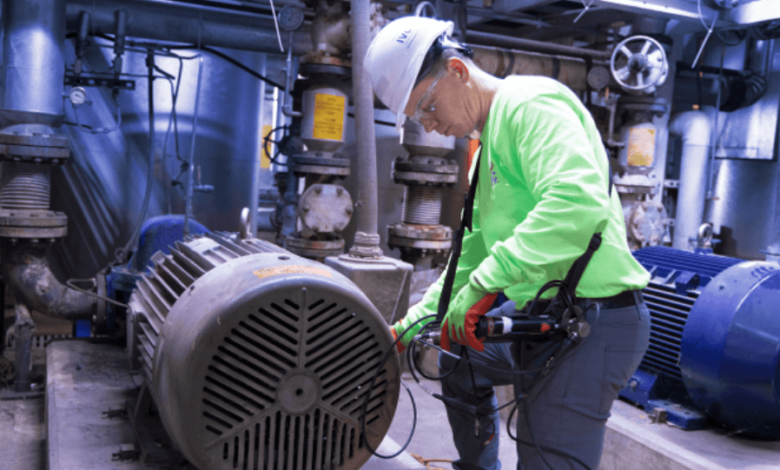
The early detection of imbalance will protect the equipment from further deterioration and wear. Vibrations produced by each moving part exhibit a distinct signature, and any deviation from that signature suggests the presence of emerging problems. Using the latest technologies, changes in amplitudes, frequencies, and harmonic distortions can help detect irregularity in the placement of mass within a component. This will ensure that any signs of imbalance will be diagnosed before any damage to the bearings and shaft occurs. Early correction minimizes stress propagation across interconnected components, preserving structural integrity and reducing the likelihood of cascading failures in complex mechanical assemblies.
Material Fatigue Reduction Through Balanced Load Distribution
Asymmetric mechanical stresses subject mechanical components to an increased amount of pressure, thereby hastening the process of wear and reducing their overall longevity. In active balancing, the load is distributed in an even manner across the rotating shaft, whereby the stress of the process is borne equally by all parts. This ensures that metal constructions do not experience any micro-fracturing, while preventing any deformations due to strain. Operating machines under dynamically balanced conditions ensures that there is little friction, thus leading to improved performance and efficiency. Over time, this equilibrium significantly delays wear-related deterioration and supports sustained high-performance output in demanding industrial environments.
Correcting Imbalance Without Disassembly
The conventional methods of maintaining machinery necessitate the total disassembly of the device, which results in extended periods of downtime and expensive labor costs. Nevertheless, current balancing technology allows for adjustments to be made without the need to shut down the machine completely or when the equipment is partially assembled. External correction masses or precision calibration devices can be utilized to make precise adjustments. In many industrial applications, operators choose to invest in efficient balancing services that provide real-time adjustments, ensuring machinery remains stable without halting workflow or dismantling critical assemblies. This method enhances responsiveness while preserving system continuity and minimizing operational disruption.


Precision Maintenance Scheduling for Rotating Equipment
Incorporating scheduled maintenance becomes much easier if it is based on balancing data and not solely determined by time periods. Systems that monitor the vibration levels will detect the start of any imbalance that arises, and maintenance can take place at an appropriate point. By doing this, it will be ensured that maintenance takes place before the occurrence of any imbalance, without waiting for too long, which can result in equipment breakdown. Such precision maintenance also leads to efficient resource utilization, as maintenance is performed only when there are signs of imbalance. Over time, this reduces unnecessary maintenance cycles, lowers operational costs, and ensures rotating equipment remains within safe performance thresholds.
See also: Network & Technical Scan – сфк4юсщь, екфулещкшф, здщедн, Dazeeha Xotros Boxer, Photoacompn
Operational Efficiency Gains Across Industrial Systems
Balanced systems utilize lesser amounts of energy and offer better mechanical efficiency. Where the forces acting at rotations are appropriately balanced, less energy is used by the motors to retain their speed, and the amount of energy lost due to resistance in the system structures decreases. Better efficiency leads to reduced costs of running and produces more reliable outputs. Moreover, balanced systems do not produce much noise or vibrations, ensuring better safety conditions for workers and neighboring equipment. Across large-scale industrial operations, these benefits accumulate, resulting in higher productivity, fewer unexpected shutdowns, and improved long-term asset performance.The concept of dynamic adjustment acts as a fundamental tool that helps to avoid premature mechanical breakdown in the rotation process. Through active balancing, which detects imbalance, distributes load equally, allows corrections on site, promotes predictive maintenance, and enhances productivity, the industrial life expectancy of equipment can be increased tremendously. Balancing techniques help to ensure the smooth operation of industries, in addition to preventing mechanical breakdowns.