Ground stabilization and structural reinforcement require anchoring products that can perform reliably under demanding conditions. For construction companies, mining contractors, and geotechnical engineers, selecting the right anchor bolt manufacturer is an important part of project planning. A capable manufacturer can provide properly engineered products, consistent material quality, and anchoring solutions suited to different geological environments and installation requirements.
What Makes Anchor Bolts Important?
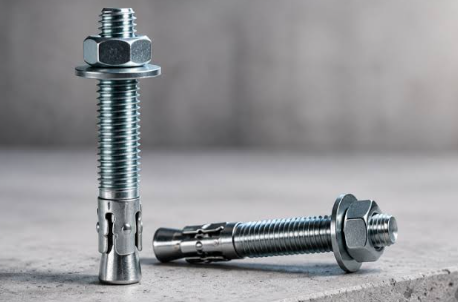
Anchor bolts are designed to provide reinforcement by transferring loads between a structure or rock formation and a stronger supporting zone. In geotechnical applications, they can be used to improve the stability of tunnels, excavations, slopes, foundations, and underground structures.
Their performance depends on several factors, including the properties of the surrounding ground, anchor length, diameter, steel strength, thread configuration, installation method, and grouting process. Choosing an appropriate product therefore requires more than simply selecting a bolt based on its size.
A manufacturer with specialized experience can help customers understand these requirements and identify products suitable for their intended application.

Material Quality and Manufacturing Precision
The raw material used to produce an anchor bolt has a direct impact on its mechanical performance. High-strength steel is commonly required for applications where anchoring components must withstand significant tensile and shear forces.
However, material strength alone does not determine product quality. Manufacturing precision is also important. Consistent bar dimensions, accurate threads, controlled heat treatment, and reliable production processes can help ensure that anchor components perform consistently in the field.
For large construction projects, consistency becomes particularly important because multiple anchoring components may need to work together as part of a larger reinforcement system.
Self-Drilling Anchor Systems
Modern geotechnical projects increasingly use self-drilling anchor technology where conventional drilling methods may be difficult or inefficient. Self-drilling anchor bars can combine drilling and anchoring functions, making them particularly useful in unstable or fractured ground.
A hollow anchor bar is installed together with a drill bit. After reaching the required depth, grout can be pumped through the hollow center of the bar. The grout fills the space surrounding the anchor and helps create a bond with the surrounding formation.
This installation approach can reduce some of the challenges associated with maintaining an open borehole in weak ground. It may also simplify the workflow by allowing the same component to remain in place after drilling.
Applications in Mining and Tunneling
Mining and tunneling are among the environments where dependable anchoring systems are particularly important. Excavation changes the natural stress conditions of surrounding rock, making ground reinforcement an essential consideration.
Anchor systems can be used to reinforce rock masses around underground openings and help control movement in areas affected by fractures or other geological weaknesses. In tunneling, anchoring products can support excavation faces, tunnel walls, and other sections during different stages of construction.
Because conditions can change throughout a project, manufacturers with a broad range of anchor products can offer greater flexibility when engineers need to adapt their ground-support approach.
Infrastructure and Slope Stabilization
Anchor bolts are also valuable in above-ground infrastructure projects. Roads and railway systems may require anchoring around tunnels, cuttings, retaining structures, and unstable slopes. Hydropower developments can involve large-scale excavation where rock reinforcement is necessary to maintain stability.
Slope stabilization is another common application. Anchoring systems can work alongside shotcrete, mesh, drainage systems, and other stabilization techniques to reinforce exposed rock or soil formations.
The right combination depends on site-specific geological and structural conditions, making professional product selection an important part of the engineering process.
Evaluating a Manufacturer
Before selecting an anchoring supplier, buyers should examine several factors. Manufacturing experience is one consideration, but it should be evaluated alongside product quality, technical capabilities, customization options, and quality-control procedures.
A reliable manufacturer should be able to provide clear product specifications and help customers understand differences between available anchor systems. The ability to supply compatible accessories such as nuts, plates, couplers, and drilling components can also simplify procurement and installation.
For specialized projects, customization may be valuable. Anchor diameter, length, thread configuration, corrosion protection, and drilling requirements may vary depending on the project environment.
Building More Reliable Ground Support
The effectiveness of a ground-support system depends on the interaction between product design, installation technique, and geological conditions. High-quality anchor bolts provide the foundation for this system, but successful results also require appropriate engineering and installation practices.
Working with an experienced manufacturer can help project teams select products that match their technical requirements while maintaining consistency across large-scale installations.
See also: Time Attendance Systems in Dubai: What Businesses Need to Know in 2026
Conclusion
Choosing an experienced anchor bolt manufacturer is an important step for projects involving ground reinforcement and structural stabilization. Quality materials, precise manufacturing, suitable anchor designs, and dependable self-drilling technology can support demanding applications in mining, tunneling, infrastructure, foundations, and slope stabilization. By carefully evaluating product specifications, manufacturing capabilities, technical support, and application experience, contractors and engineers can select anchoring solutions that contribute to safer and more efficient construction.