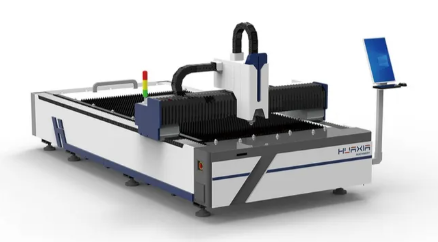
As manufacturing industries demand greater precision, faster production, and consistent product quality, advanced cutting technology has become essential for competitive operations. A metal fiber laser cutting machine helps manufacturers cut metal sheets into accurate shapes using a concentrated laser beam and computer-controlled movements. This technology supports a wide range of fabrication tasks, from producing small metal components to manufacturing complex parts for industrial machinery, automotive equipment, construction, and electrical systems.
Understanding Metal Fiber Laser Cutting Technology
A fiber laser cutting machine uses a laser source to generate a concentrated beam of light. The beam is directed through an optical system toward the metal surface, where its energy heats and melts the material along a programmed cutting path. Assist gas helps remove molten metal from the cut, creating the required edge and shape.
The machine’s CNC control system follows a digital design, allowing operators to manufacture components with detailed outlines, holes, slots, and curves. Instead of creating separate cutting tools for every design, manufacturers can often change production requirements by updating the cutting program.
Depending on the machine configuration and operating parameters, fiber laser systems can process carbon steel, stainless steel, aluminum, brass, and other compatible metals. Material thickness, laser power, cutting speed, and required finish all influence the final result.
Major Benefits for Metal Fabrication Businesses
Improved Cutting Accuracy
Accurate dimensions are important when components must fit together during assembly. Fiber laser cutting can produce narrow cutting paths and detailed shapes, helping manufacturers maintain consistent component dimensions. Proper calibration and suitable cutting parameters are essential for achieving the desired quality.
Faster Production
Automated cutting can reduce the time required to manufacture repeated components. Once a design is programmed, the machine can follow the specified cutting path with limited manual intervention. Processing speed depends on the material, thickness, laser power, and complexity of the design.
Better Material Utilization
Metal sheets can represent a significant portion of manufacturing costs. Nesting software arranges multiple component designs on a sheet to reduce unused space and minimize scrap. Efficient nesting can help businesses control material expenses, particularly when producing large batches or working with higher-cost metals.
Flexible Manufacturing
Fiber laser cutting supports a broad range of designs without requiring a dedicated mechanical cutting die for every component. This flexibility is valuable for custom fabrication, product development, prototype manufacturing, and businesses handling orders with different specifications.
Reduced Secondary Processing
A properly configured laser cutting process can produce clean edges and accurate shapes, potentially reducing the need for additional grinding or finishing. The amount of secondary work required depends on the material, thickness, cutting settings, and quality standards of the finished product.
Industries That Benefit from Fiber Laser Cutting
Metal fiber laser cutting machines serve many industries where accurate components and efficient production are important.
- Automotive manufacturing: Cutting brackets, metal panels, mounting components, and other fabricated parts.
- Construction and infrastructure: Producing metal plates, connection pieces, structural components, and architectural elements.
- Electrical equipment: Manufacturing control cabinet panels, enclosures, mounting plates, and equipment housings.
- Agricultural machinery: Creating machine frames, protective covers, brackets, and replacement parts.
- Furniture production: Cutting decorative panels, metal frames, shelving components, and customized furniture elements.
- General fabrication: Producing custom metal parts for machinery manufacturers, industrial contractors, and equipment suppliers.
These applications demonstrate how one cutting technology can support different production requirements when the machine is selected and configured appropriately.
How to Select the Right Machine
Choosing suitable equipment begins with understanding your actual production needs. Businesses should evaluate several factors before making an investment.
Material type and thickness: Identify the metals you process regularly and determine the maximum thickness required. Different materials respond differently to laser energy, so cutting capabilities should be confirmed for the intended applications.
Laser power: Higher-power machines may support faster cutting or thicker materials under suitable conditions. However, greater power does not automatically guarantee better results for every job. Balance performance requirements with purchase price and operating expenses.
Working area: Select a machine bed that accommodates your typical sheet dimensions. Consider loading space, unloading arrangements, and the available workshop area.
Control software: User-friendly CNC software and compatible design-file formats can simplify production planning and reduce programming difficulties.
Service and support: Check the availability of replacement parts, maintenance guidance, operator training, warranty coverage, and technical assistance.
HS Laser offers industrial laser equipment and customized solutions for different manufacturing applications. Buyers considering its metal fiber laser cutting machines should request current specifications, sample cutting results, and configuration details that match their materials and production goals.
Maintenance and Workplace Safety
Routine maintenance helps preserve cutting quality and minimize unexpected downtime. Operators should inspect cutting nozzles, protective lenses, cooling systems, and optical components according to the manufacturer’s instructions. Clean working surfaces and properly maintained assist-gas supplies also contribute to consistent performance.
Laser cutting requires appropriate safety controls. Depending on the system, these may include protective enclosures, interlocks, warning indicators, suitable protective eyewear, and effective extraction of smoke and airborne particles. Operators should receive proper training and follow established safety procedures.
Regular servicing and documented inspections help identify potential problems before they interrupt production.
Conclusion
A metal fiber laser cutting machine can help manufacturers improve precision, production flexibility, and material efficiency. Its computer-controlled operation makes it suitable for industries ranging from automotive manufacturing to construction and general metal fabrication. By assessing material requirements, laser power, working dimensions, software, maintenance needs, and supplier support, businesses can choose equipment that aligns with their production objectives and supports long-term manufacturing growth.