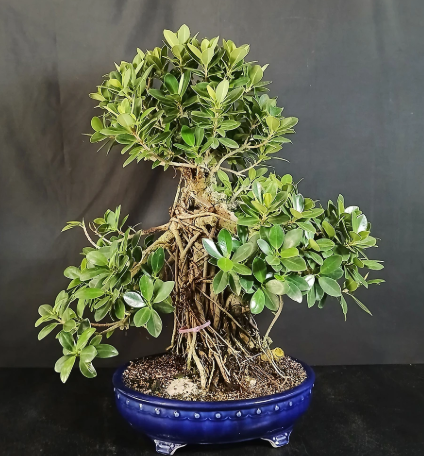
A distinctive tree can completely change the character of an outdoor space, especially when it combines mature form with artistic training. An aerial roots ficus bonsai offers exactly this type of visual impact. Wulala Garden’s 4.5-meter Ficus microcarpa features exposed aerial roots, a sturdy trunk, layered canopies, and dense evergreen foliage, making it particularly suitable for premium gardens, resorts, parks, villas, and large commercial landscapes.
Why Placement Matters
The visual character of a large bonsai tree depends heavily on where it is planted. Unlike smaller ornamental plants that can be incorporated into borders or groups, a 4.5-meter Ficus bonsai has enough scale to become a primary landscape feature. Its unusual trunk and root structure deserve sufficient space so visitors can appreciate the tree from different viewpoints.
Open courtyards, spacious entrances, hotel gardens, poolside areas, and large lawns can provide suitable settings. Positioning the tree where its canopy does not compete with buildings or other large plants can also make its sculptural structure more noticeable.
Creating a Strong Entrance Feature
Entrance landscaping is one of the most effective applications for a large Ficus bonsai. Hotels, resorts, private estates, and commercial properties often use distinctive plants to create a memorable first impression.


The aerial roots add texture around the lower portion of the tree, while the multi-tiered canopy introduces height and visual depth. Wulala Garden describes the tree as suitable for luxury estates, villas, resorts, golf courses, urban parks, and other large-scale landscape projects.
For an entrance, the tree can stand independently as a focal point or become part of a broader composition featuring stone, paving, low shrubs, lighting, and groundcover.
Adding Tropical Character to Resorts
Ficus microcarpa naturally works well with tropical and subtropical landscape themes. The 4.5-meter model is described as thriving in warm, humid conditions and maintaining dense, glossy evergreen foliage.
This makes it particularly attractive for resort environments where landscaping is expected to create a relaxing atmosphere. A carefully positioned Ficus can complement outdoor restaurants, reception areas, walkways, swimming pools, lounges, and garden seating.
Its year-round foliage can also help maintain a consistent appearance instead of relying on seasonal flowering plants for visual interest.
A Statement Tree for Private Gardens
In a residential setting, a large Ficus bonsai can provide a sense of maturity and permanence. Instead of filling a garden with numerous unrelated ornamental plants, homeowners and landscape designers can use one substantial specimen as the central feature.
Aerial roots give the trunk an especially interesting appearance, while the layered canopy provides vertical structure. In a spacious courtyard, the tree can be surrounded by simpler plants so that attention remains focused on its form.
The result can be an outdoor environment that feels more established without requiring excessive decorative elements.
Designing Around the Root Structure
One of the most important features of this Ficus is its aerial root formation. According to Wulala Garden, these roots develop above the soil and eventually contribute to the strong trunk structure characteristic of the tree. The company also states that its large Ficus bonsai trees are carefully pruned and trained over time to develop multi-tiered canopies.
Because the roots are part of the tree’s visual identity, landscape designers should avoid hiding them behind dense groundcover. A clean planting zone, decorative stone, or carefully selected low-growing plants can help emphasize the trunk and root formation.
Supporting Healthy Growth
Good landscape design must always consider plant health as well as appearance. The product information recommends full sun with at least six hours of direct sunlight each day. During the first month after transplantation, watering every two to three days is recommended while avoiding waterlogged soil. Once established, watering frequency can be adjusted according to season and soil moisture.
Wulala Garden lists 18–35°C as the optimal growth range and identifies USDA zones 9–11 as suitable for outdoor planting. These requirements should be evaluated before installation to ensure the local climate can support healthy growth.
See also: Time Attendance Systems in Dubai: What Businesses Need to Know in 2026
A Practical Choice for Premium Landscaping
The appeal of a large aerial-root Ficus goes beyond its height. Its trained canopy, exposed root structure, evergreen foliage, and substantial trunk give it qualities normally associated with mature landscape specimens.
For architects, landscape designers, developers, and property owners, selecting the right location can maximize these characteristics. Whether used to define a luxury entrance, enhance a resort garden, anchor a private courtyard, or create a focal point in a public landscape, a well-positioned Ficus bonsai can bring structure and personality to an outdoor environment. With appropriate sunlight, watering, nutrition, and pruning, it can remain a significant landscape feature for years to come.